Court Marriage in Nepal
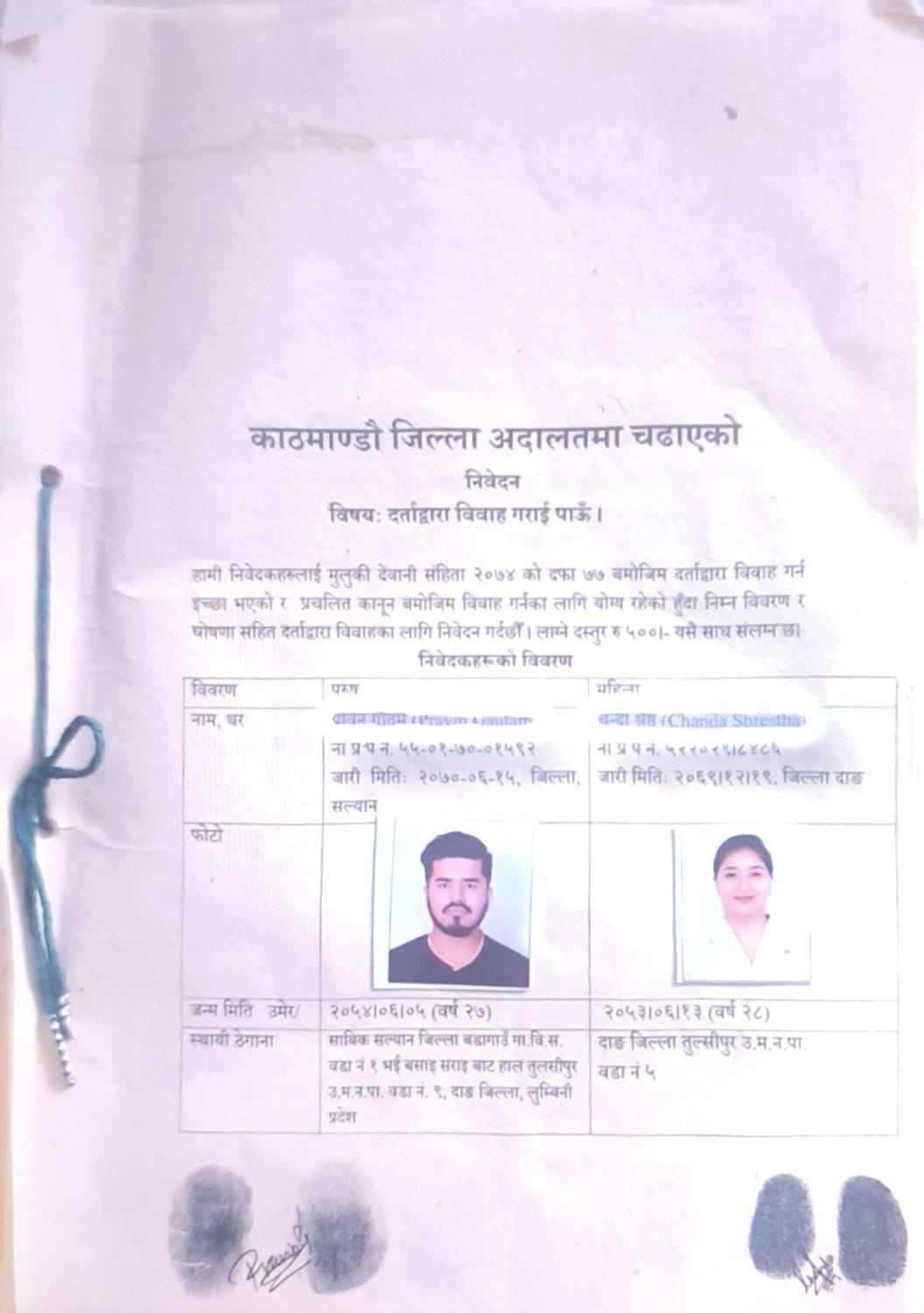
Marriage in Nepal: Historical Tradition, Religious Perspective, Legal Development, and Modern Legal Procedures
1. Introduction
Marriage is one of the most important institutions of human society. Looking at the history of human civilization, marriage is not merely a relationship between two individuals but a union between families, clans, and cultures. Societal rules, religious beliefs, physical and mental maturity, emotional stability, and socio-cultural norms make marriage an essential social organization.
In a diverse society like Nepal, which has multiple ethnicities, religions, and cultures, marriage traditions are particularly rich and varied. Hindu, Buddhist, Kirat, Muslim, and Christian communities all have their own marriage customs. However, in today’s context, the state operates on a modern legal framework, where the law is considered supreme over religion.
Therefore, while there are different types of marriages today, the legal recognition of any marriage is based solely on the rules, procedures, and regulations established by the Government of Nepal.
This essay aims to provide a comprehensive study of marriage in Nepal, covering tradition, types, social development, legal basis, and step-by-step modern legal procedures.
2. Historical Background of Marriage
2.1 Early Social Structures and Marriage
In the early stages of human society, the forms of marriage were entirely different. In prehistoric times, humans lacked detailed knowledge of family, partnership, parenthood, and social responsibilities. As a result, marriages were unstable, informal, and often based on physical or social power.
2.2 Development of Marriage with Civilization
As society stabilized, agriculture developed, and the concept of property emerged. This led to the evolution of marriage as:
- A social institution
- A means to establish a family
- A mechanism for property rights
- A moral and religious bond
2.3 Traditional Marriage Practices in Nepal
From the Vedic era, marriage in Nepal has been considered a sacred ritual. In the Hindu community, marriage is believed to bind a couple for seven lifetimes, while in the Buddhist community, marriage is considered a contractual social bond.
The Kirat community practices “Chamkho–Wogo”, the Gurung community observes “Roti Bhedi”, and other communities like Tharu, Magar, and Tamang have their own unique customs.
3. Types of Marriage: Tradition and Modernity
Nepal has different types of marriages, which can be classified socially, legally, and religiously.
3.1 Traditional Forms of Marriage
- Brahma Marriage – Marriage based on mutual consent according to Vedic principles
- Daiva Marriage – Marriage performed according to religious rites
- Arsha Marriage – Marriage performed by offering a token to a priest or teacher
- Gandharva Marriage – Love-based marriage by mutual consent
- Prajapatya Marriage
- Rakshasa, Asura, and Paisach Marriage – Historically recognized but no longer practiced
3.2 Modern Types of Marriage
- Religious/Traditional Marriage
- Civil/Court Marriage
- Registered Marriage
- Community-based Marriages (Kirat, Muslim, Christian, etc.)
3.3 Three Main Legal Marriage Types in Modern Nepal
- Social–religious marriage
- Judicial (court) marriage
- Marriage registration at the local government (ward) level
4. Role of Marriage in Society
Marriage is not only a personal decision but also linked to:
- Social stability
- Family formation
- Emotional security
- Economic cooperation
- Legal status and inheritance rights
Without marriage, society risks informal or unregulated relationships, which could weaken morality, social identity, and legal rights. Therefore, marriage has remained an indispensable element of human civilization.
5. Legal Framework for Marriage in Nepal
Currently, marriage in Nepal is regulated by:
- Muluki Civil Code, 2074 (Nepalese Civil Code)
- Muluki Criminal Code, 2074 (for prohibited relations and offenses)
- Marriage Registration Regulations, 2078
- Local Government Operation Act, 2074
- Other related acts regarding citizenship and rights
These laws govern:
- Eligibility for marriage
- Legal procedure
- Required documents
- Prohibited relationships
- Rights and responsibilities of spouses
- Registration process
6. Legal Requirements for Marriage in Nepal
6.1 Age Requirements
- Male: 20 years and above
- Female: 20 years and above
(Legal marriage is not valid if either party is underage.)
6.2 Marital Status
- Both parties must be unmarried,
- Or legally divorced,
- Or widower/widow.
6.3 Prohibited Relationships
Marriage cannot occur between close blood relatives, such as:
- Father–daughter
- Mother–son
- Siblings
- Uncles, aunts, and direct relatives
6.4 Consent
Marriage must occur with the free consent of both parties. Forced marriage is a criminal offense.
7. Step-by-Step Legal Procedure for Marriage in Nepal
7.1 Religious Marriage + Local Registration
This is the most common type of marriage in Nepal.
- Conduct the marriage according to social and religious customs
- Families and witnesses must be present
- Register the marriage at the Ward Office
- Receive an official marriage registration certificate
- Legal recognition in citizenship, inheritance, passport, and property
7.2 Court Marriage
Court marriage is the most legal, straightforward, and internationally recognized procedure, especially for:
- Foreign nationals marrying Nepalese citizens
- Foreign nationals marrying other foreigners
- Nepalese marrying abroad
Required Documents
- Citizenship / Passport
- Single/Unmarried certificate
- Two witnesses
- Photographs
- Notarized documents
- For foreigners: Embassy NOC, Single Status, Legalization
- 15-day residence proof (if foreigner or from another district)
Procedure
- Submit application form
- Submit documents for verification
- Court verification and review
- Marriage hearing
- Judge’s approval
- Receive marriage certificate
Timeframe
2 to 3 days
8. Legal Basis for Foreigners to Marry in Nepal
According to Nepalese Civil Code:
- Foreigners can marry other foreigners
- Foreigners can marry Nepalese citizens
Conditions:
- Both must be at least 20 years old
- Both must be unmarried
- NOC from embassy
- Single status certificate
- Passport
- Translation and notarization of foreign documents
- Court procedure
Nepal legally recognizes marriages involving foreigners.
9. Importance of Legal Marriage
Legal marriage provides multiple benefits:
- Recognition as husband and wife
- Inheritance rights
- Legal status of children
- Property rights
- Legal recognition for bank, visa, and passport purposes
- Social and personal security
Without legal registration:
- Marriage is not recognized
- Property rights are complicated
- Foreign recognition may not be valid
10. Legal Rights of Husband and Wife after Marriage
According to the Civil Code:
- Mutual respect
- Right to cohabitation
- Cooperation in property and health matters
- Representation in household affairs
- Protection against harmful behavior
11. Divorce and Court Perspective
The Supreme Court of Nepal has stated:
- A marital relationship continues only through mutual understanding, love, and harmony
- Continuous disputes, quarrels, and long-term separation remove the justification for continuing a marriage
Marriage is not a prison; a relationship maintained under constant conflict is not valid. Laws provide the right to divorce when necessary.
12. Conclusion
Marriage has been a foundational institution for maintaining social order since ancient times. While religion, culture, and tradition have given marriage sanctity and dignity, modern legal frameworks ensure security, legality, and rights for both parties.
In Nepal, whether through religious rituals, court procedures, or registration at the local level, marriage is now fully recognized legally, including for foreigners.
Marriage is not merely a union of two individuals—it is a social bond, a legal contract, an emotional partnership, an economic collaboration, and a lifelong journey.
This essay provides a detailed, structured, and educational overview of Nepal’s marriage system, covering historical, social, cultural, and legal dimensions.
Recent Articles
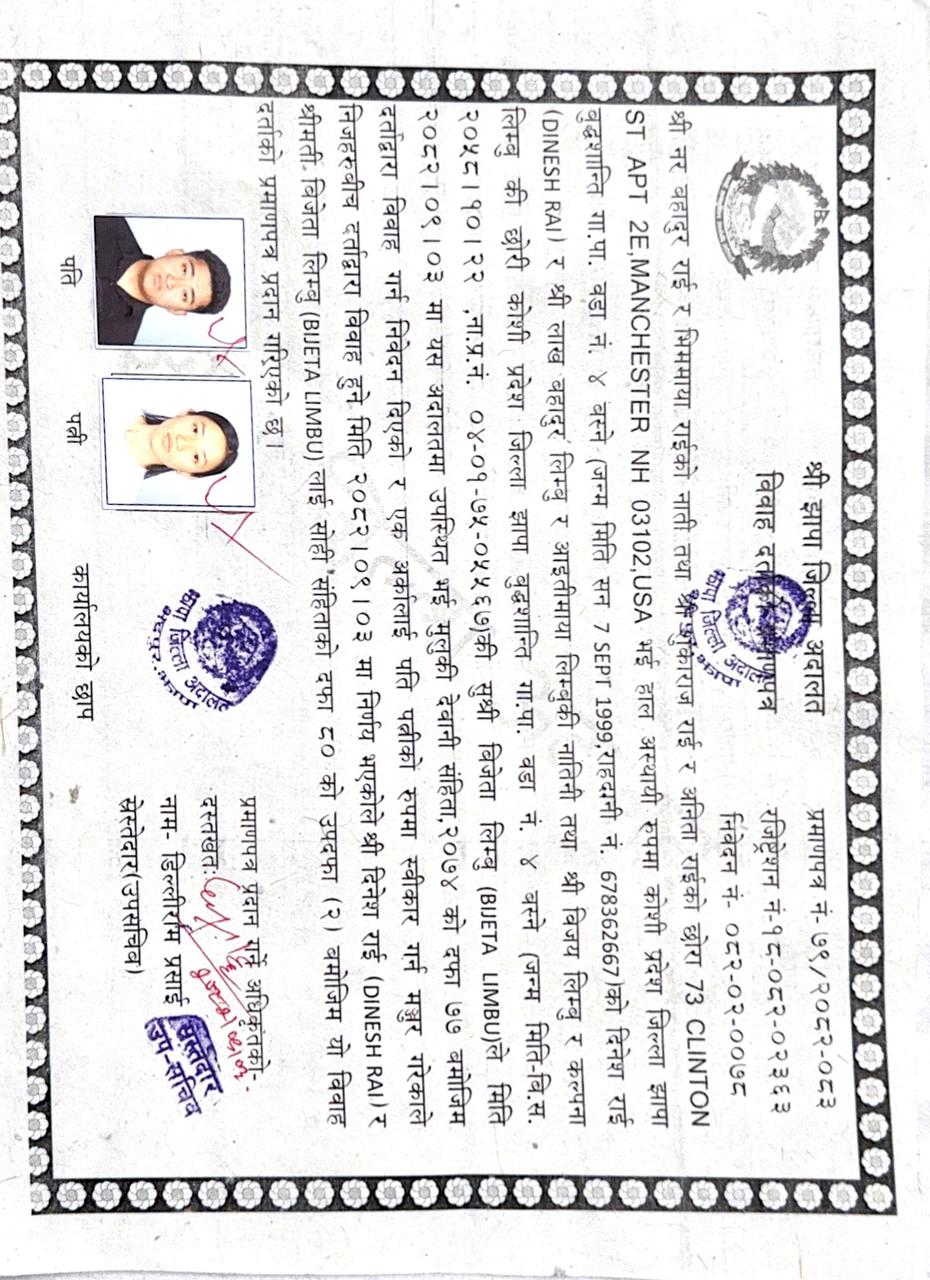
Court Marriage Certificate
Dec 25, 2025
Notary: Letter to Immigration
Dec 25, 2025
Translation: Human Trafficking
Dec 12, 2025
Translation: Contract
Dec 11, 2025