Court Marriage: Nepali Senario

Court marriage in Nepal has emerged as a modern, legally secure, and increasingly preferred method for couples seeking an efficient and straightforward path to marital recognition, especially in a society where traditional customs often blend with evolving social values.
Court marriage in Nepal has emerged as a modern, legally secure, and increasingly preferred method for couples seeking an efficient and straightforward path to marital recognition, especially in a society where traditional customs often blend with evolving social values. Governed primarily by the National Civil Code 2017, court marriage provides a structured legal framework that allows two consenting adults—regardless of caste, ethnicity, religion, or social background—to formalize their union without the complexities of traditional ceremonies. The process begins with both partners submitting a joint application to the District Court, declaring their free will to marry, along with essential documents such as citizenship certificates, passport-size photographs, and, when necessary, divorce decrees or death certificates of former spouses. What makes court marriage compelling is its clarity: the court verifies identities, ensures that neither party is underage nor legally disqualified, and confirms that the decision to marry is voluntary and free from coercion. Unlike customary marriages, court marriage replaces ritualistic elements with a legal oath, a witness-supported affirmation, and an official registration that results in the issuance of a marriage certificate recognized not only across Nepal but also by foreign embassies, immigration offices, and international agencies. The procedure, though simple on the surface, carries significant depth; couples must navigate legal scrutiny, mandatory waiting periods in certain circumstances, and procedural formalities that guarantee the marriage’s validity. In Kathmandu, where most couples seek swift processing, the District Court handles hundreds of applications each year, reflecting a growing societal shift toward pragmatic and rights-based marital decisions. For inter-caste couples, interfaith partners, Nepali citizens marrying foreigners, or individuals seeking privacy away from social pressure, court marriage serves as a powerful legal shield, offering protection, recognition, and the undeniable weight of state authority. The environment inside the court, often charged with anticipation, reveals a cross-section of modern Nepali life—students holding hands nervously, professionals seeking formality for visa purposes, and couples who have battled societal resistance finally finding a safe space to legitimize their love. Despite its efficiency, the process demands accuracy and preparedness: errors in documents, mismatched details, or incomplete forms can delay approval. After verification, the judge administers a brief oath, the couple signs the official register, witnesses validate the act, and the court issues a legally binding marriage certificate, often on the same day. This certificate becomes the foundation for immigration processes, visa sponsorship, property rights, spousal benefits, and other civil entitlements. Ultimately, court marriage in Nepal stands as a testament to changing social dynamics—a confluence of legal certainty, personal freedom, and modern practicality, empowering couples to define their own path in a society that is steadily embracing individuality, equality, and the rule of law.
-Bibek Shah
Recent Articles
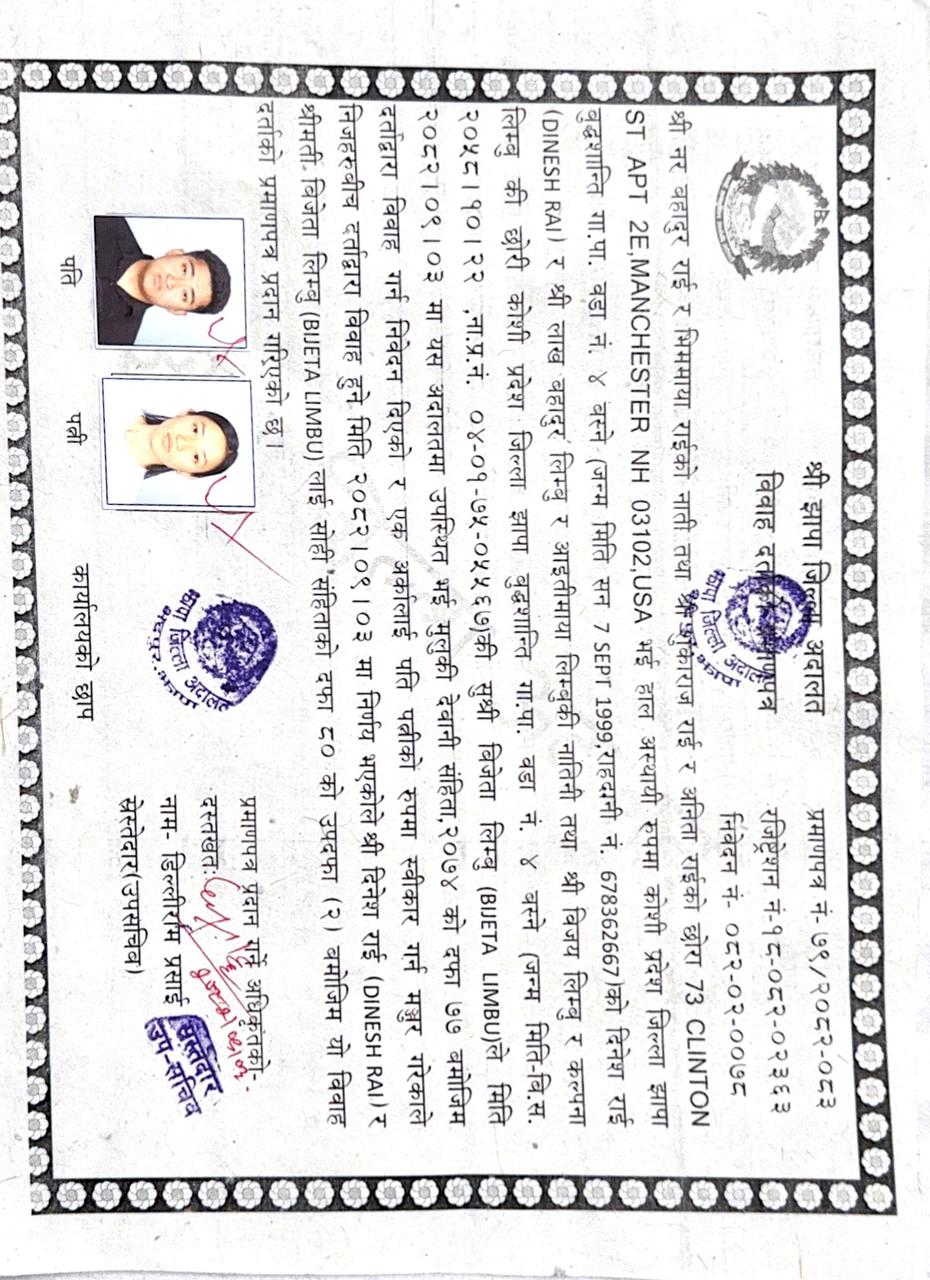
Court Marriage Certificate
Dec 25, 2025
Notary: Letter to Immigration
Dec 25, 2025
Translation: Human Trafficking
Dec 12, 2025
Translation: Contract
Dec 11, 2025