Notary Public: A Sketch
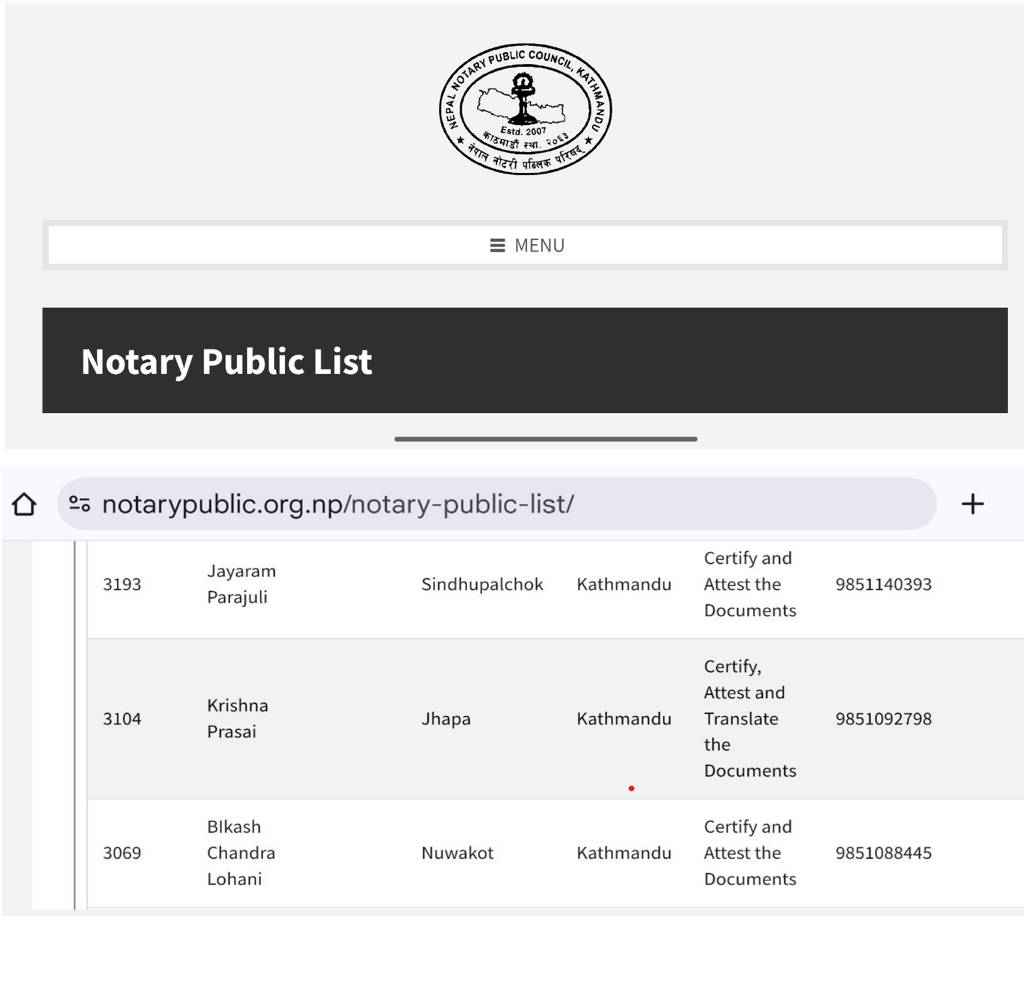
A notary public in Nepal must meet legal qualifications, pass required exams (for translators), complete training, obtain a 5-year renewable certificate, work within the assigned jurisdiction, and submit periodic reports as mandated by the Notary Public Act 2063.
Required qualification to take certificate of the Notary Public
There are prescribed the following qualifications to be a notary public in section 12 of the Nepal Notary Public Act, 2063 B.S. Even such a qualified person, only after completing the process of the Act or Rules, may get a certificate from the Notary Public.
(a) Legal professional who has practiced law for 7 years, or
(b) The person separated remaining at least in the 2nd class gazetted post of the Nepal Justice Service.
Disqualifications of the Notary Public
There are prescribed disqualifications of the notary public in section 14 of the Notary Public Act, 2063. In short, the following are disqualifications.
(a) The person who has not passed the examination held per section 11 for translator Notary Public.
(b) The person who has no qualification per section 12.
(c) The person who has obtained punishment confirming guilt by the Court of Justice for committing the crime of murder, theft, dacoity, fraud or fraudulence, corruption, rape, transportation and consumption of narcotic drugs, human trafficking, or other serious crimes of a similar nature.
(d) The person who has no good conduct,
(e) Non-Nepali citizen.
(f) The person who is involved with the creditor.
(g) Mentally imbalanced person.
Process to obtain certificate of the Notary Public
There is a provision made in section 10 of the Notary Public Act that no person may do the work of the notary public without obtaining a certificate of the notary public. The persons who are qualified according to section 12 of the Notary Public Act, 2063 B.S., to obtain a certificate of the Notary Public should apply in the prescribed form, attaching prescribed fees according to section 14 of the Notary Public Act, 2063 B.S. If the application is filed in such a way, then the Council shall form a committee to make a recommendation after doing an inquiry of the application. If the said committee recommends distributing a certificate to the applicant and while doing inquiry, if their recommendation is found reasonable, then the Council, providing required training to the Notary Public and taking a guarantee from the applicant according to section 17 of the Notary Public Act, 2063 B.S., will distribute the certificate in the prescribed form. But for the translator notary public, they should pass the written examination for translators to be conducted by the Notary Public Council. Only then, by taking participation in training, may applicants obtain a certificate from the notary public authorizing them to translate.
An examination must be passed to be a translator notary public.
There is a provision made in section 11 of the Notary Public Act, 2063 B.S., that the examination of the Notary Public must be passed by the person who wants to take the certificate to translate, including the works of the Notary Public, and to do particular works prescribed by the Notary Public Council. Currently, there is a provision to conduct the examination in writing, making the 1st paper a translation from Nepali to the English language and the 2nd paper from English to the Nepali language, making the mark weightage 100 for each paper. The examinee who takes participation in the examination of the translator notary public must pass, obtaining at least 80% in each paper, and should take participation in the training to be conducted for the notary public; only then may they obtain a certificate including translation.
Duration of certificate and renewal
The duration of the certificate distributed according to the Notary Public Act, 2063 B.S., will be for 5 years. There is a provision made in section (14) of the Notary Public Act, 2063 B.S., that the said certificate must be renewed.
(a) To certify Deed,
(b) To translate paper from one language to another language, and
(c) To attest a duplicate of the original paper.
(d) But work of translation per clause (Kha) can be done only by the translator notary public. The working area (working district) of every notary public is mentioned in the certificate of the notary public. Therefore, no notary public may work beyond their territorial jurisdiction. No person may work as the notary public without obtaining a certificate of the notary public.
Responsibilities of the Notary Public
There is a provision made for the submission of a report by the Notary Public in section 25 of the Notary Public Act, 2063 B.S., and rule 23 of the Notary Public Rules, 2063. Per it, preparing an annual report of works performed by the Notary Public should be submitted to the concerned District Court of Justice and the Notary Public Council every year up to the last day of the month of Baishakh. Every month details of works performed by the notary public who does deed certification related to the title transfer of immovable property must be sent to the concerned Land Revenue Office.
Recent Articles
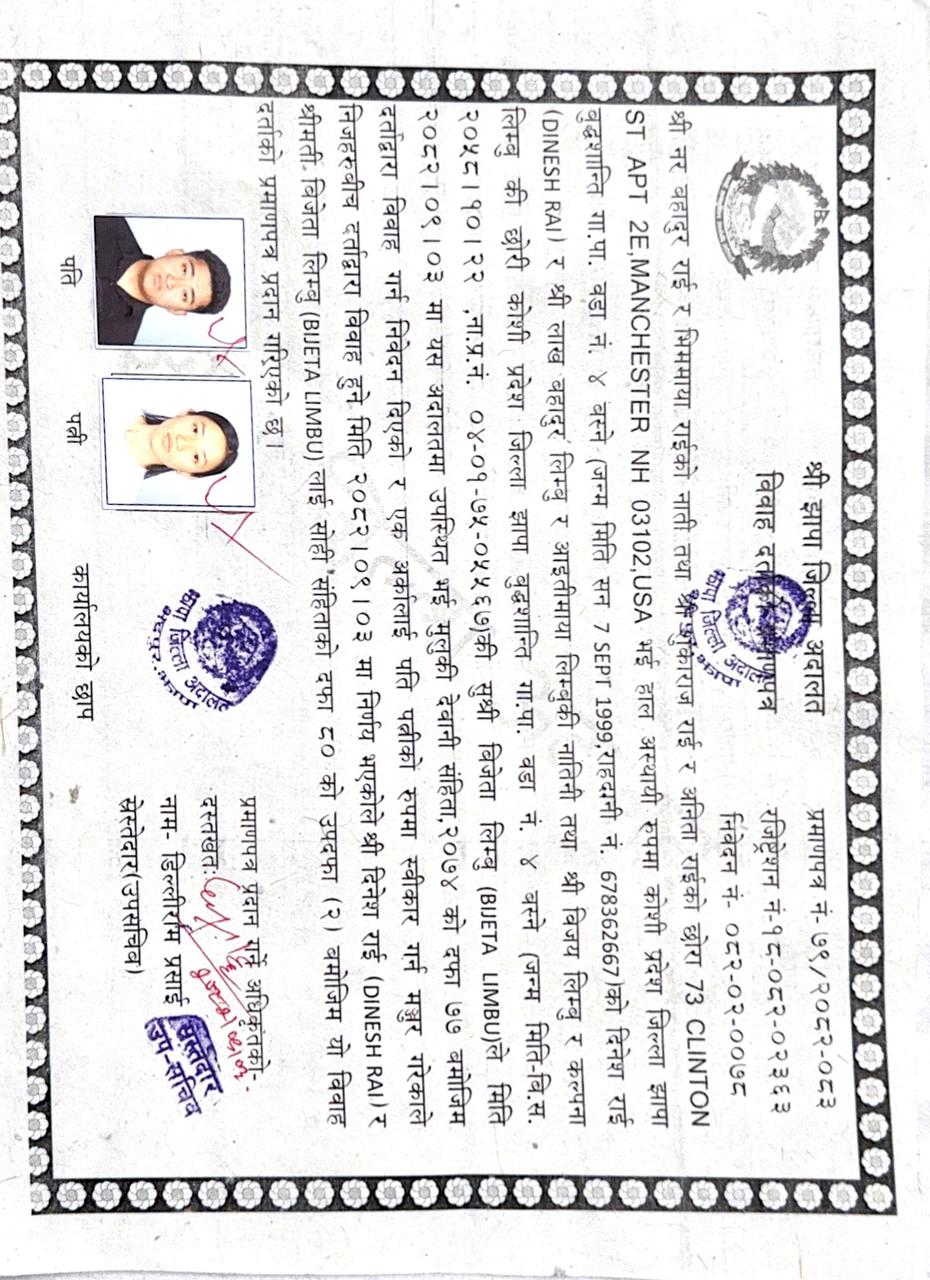
Court Marriage Certificate
Dec 25, 2025
Notary: Letter to Immigration
Dec 25, 2025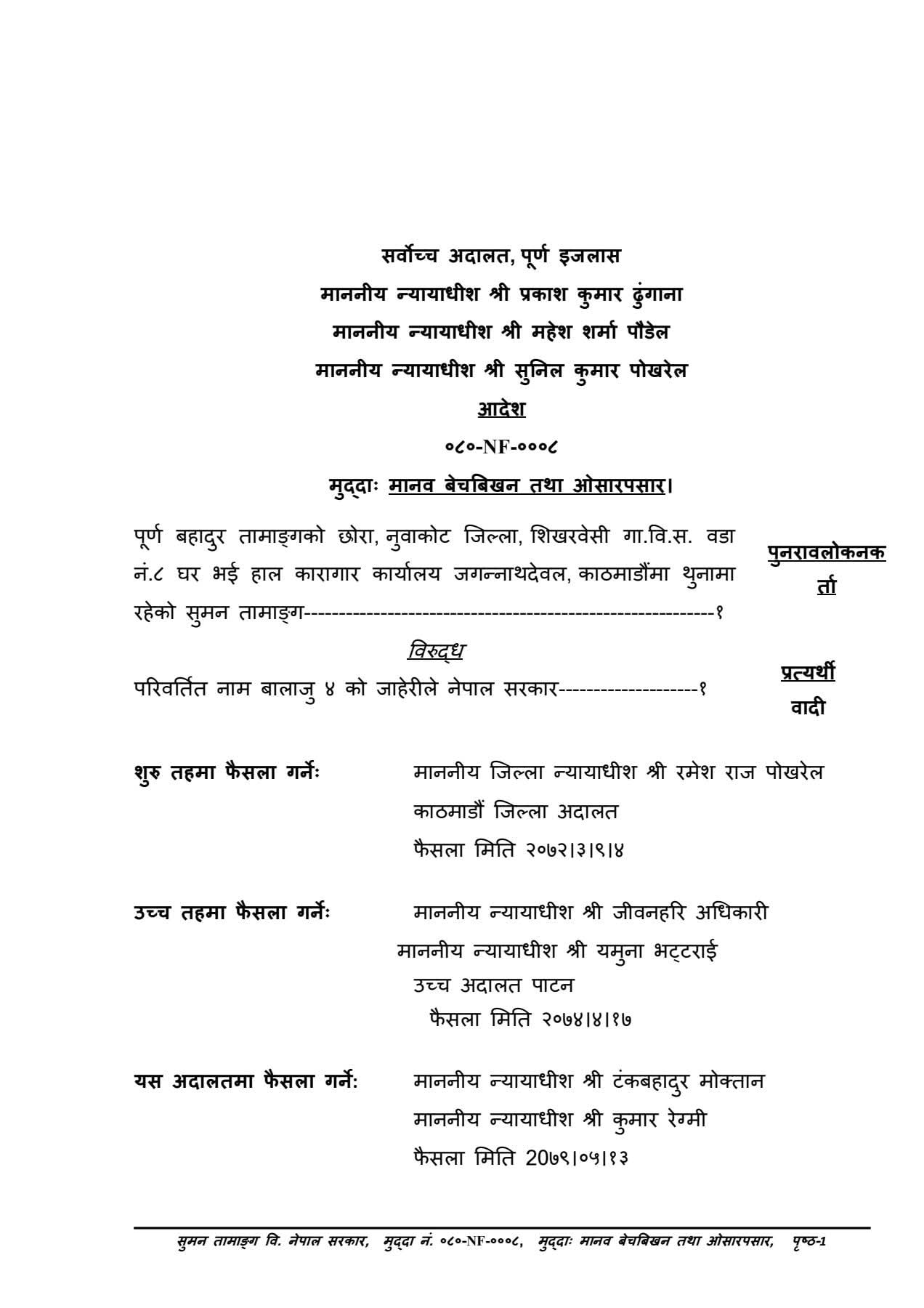
Translation: Human Trafficking
Dec 12, 2025
Translation: Contract
Dec 11, 2025